
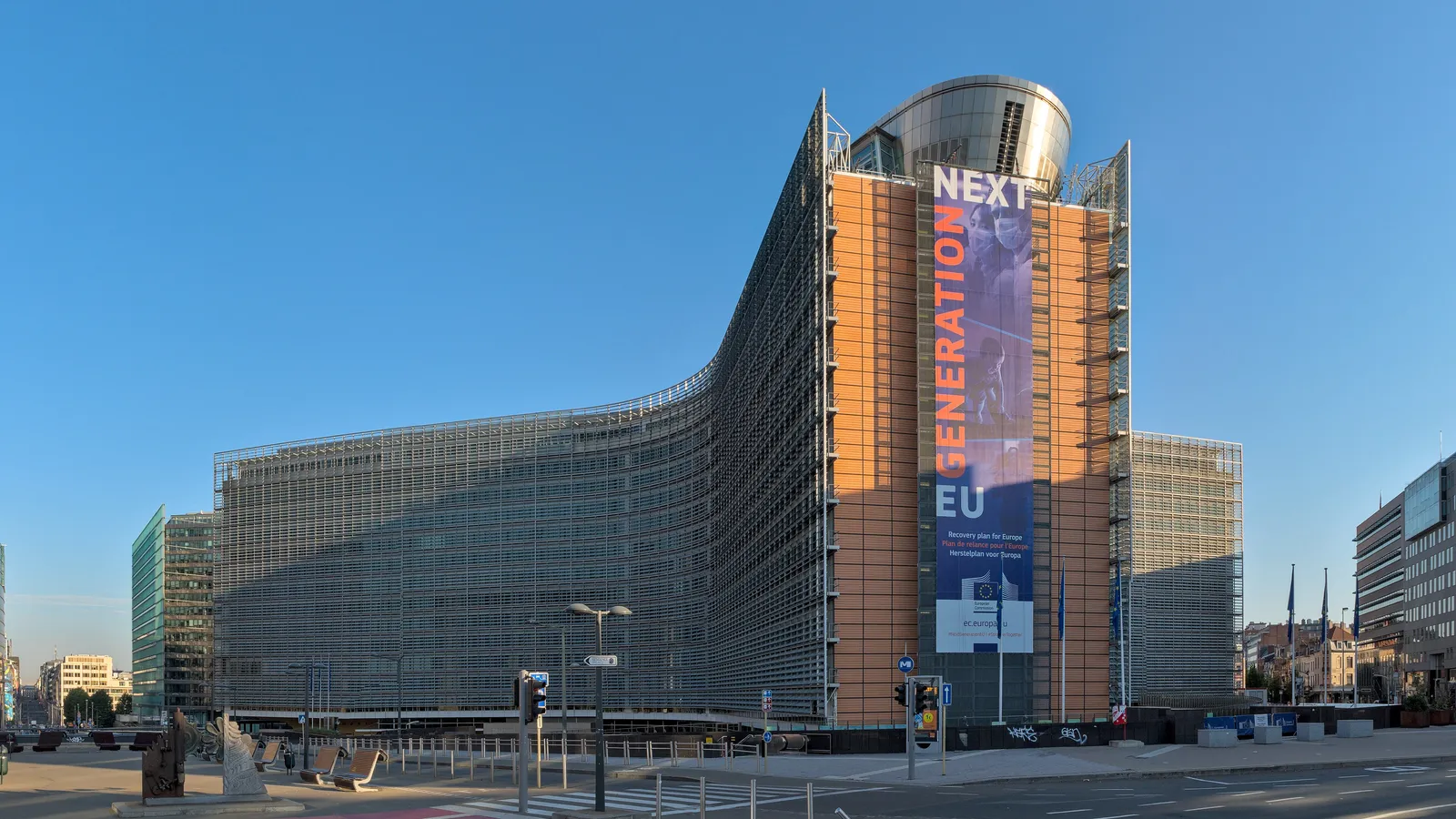
78 days until the EUDR bites: in Songkhla, EUDR latex fetches less than 2 baht more than regular rubber on average
The European Commission still lists 30 December 2026 as the EUDR start date for large and medium operators, and Thailand is classed as low-risk. But RAOT has cut its target for EUDR rubber traded through its markets from 130,800 to 90,826.85 tonnes because real buyers were fewer than planned.
The European Commission still lists 30 December 2026 as the start date for large and medium operators. Thailand has an edge because it is classed as a low-risk country. But the Rubber Authority of Thailand (RAOT) has just cut its target for EUDR rubber traded through its markets from 130,800 to 90,826.85 tonnes, because actual buyers were fewer than planned.
According to closing prices at the Songkhla central rubber market of the Rubber Authority of Thailand (RAOT, the state agency that oversees the whole rubber sector and runs the central markets growers use as a daily reference price), on 13 October 2026 EUDR field latex (rubber that meets the EU Deforestation Regulation, which requires rubber sold into Europe to prove it does not come from deforested land) closed at 90.50 baht per kilogram, while regular field latex closed at 89.45 baht, a gap of 1.05 baht. The day before, the same data show EUDR rubber at 90.50 baht and regular rubber at 88.25 baht, a gap of 2.25 baht. Volumes also differ widely. The RAOT table for 13 October shows 105,800 kilograms of EUDR field latex traded through the central market, against 258,960 kilograms of regular latex [4].
RubNex pulled Songkhla central-market field-latex closing prices from RAOT's data system from 2 September to 13 October, keeping only days with prices for both EUDR and regular rubber. That gave 41 days (including the Saturdays and Sundays on which RAOT published prices). We subtracted the regular price from the EUDR price day by day. The smallest gap was 0.50 baht, the largest 3 baht, and the average over all 41 days was 1.96 baht per kilogram [4][5]. Growers deciding whether to prepare EUDR documents should know this number.
Start dates under the latest notice
The European Commission says on its website that the EUDR will apply to large and medium operators from 30 December 2026, and to micro and small operators from 30 June 2027. It notes the regulation was amended in December 2024 and December 2025 [1]. Counting calendar days from 13 October to 30 December leaves 78 days.
The core rules have not changed. A study by the Bank of Thailand (BOT, Thailand's central bank, whose research department studied the EUDR's impact on Thai rubber) sums up three conditions. Rubber entering the EU market must come from land not deforested after 31 December 2020. It must be produced legally under the laws of the producing country. And the importer must file a Due Diligence Statement before placing the goods on the market [9].
What has changed is the product list. From 18 September 2026, Annex I of the EUDR follows Delegated Regulation (EU) 2026/2102. Consultancy Polygon One sums up: natural rubber, compounded rubber, new tyres, inner tubes and rubber gloves remain in scope. But conveyor belts, general vulcanised rubber goods under HS heading 4016 such as seals and floor mats, and used and retreaded tyres have been removed. Synthetic rubber was never covered by this law [2].
Thailand is low-risk, but plot coordinates are still needed
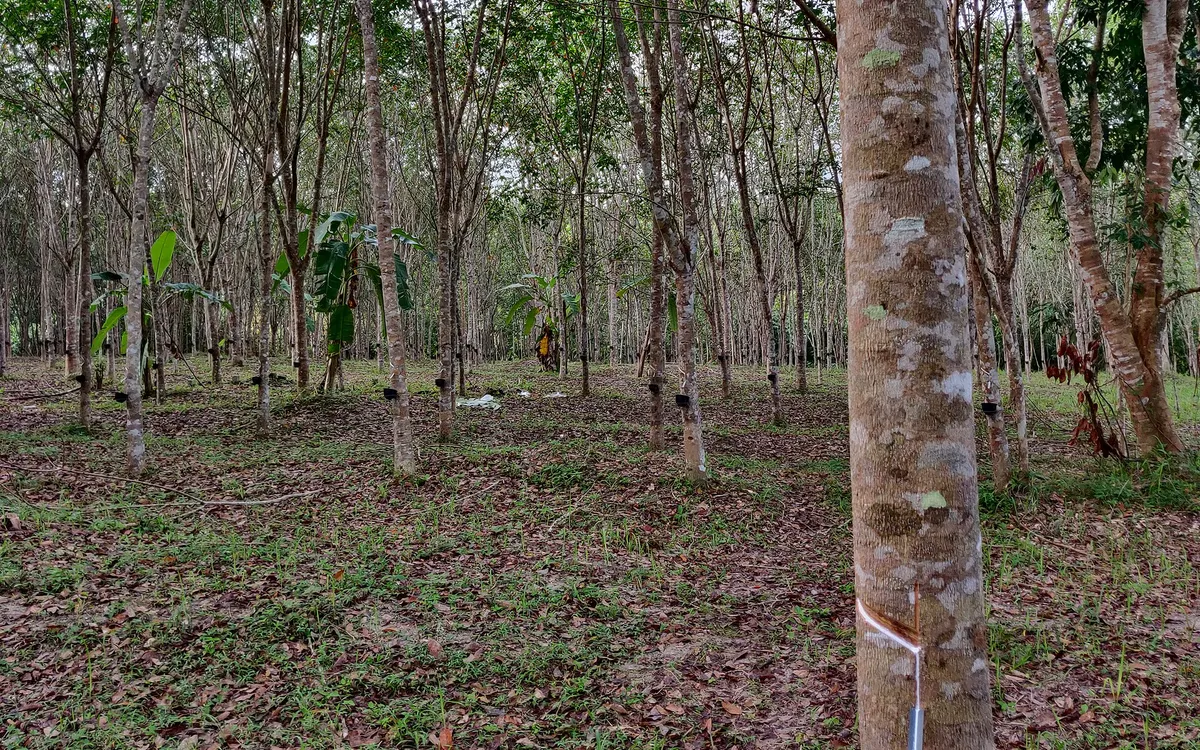

The EU has classed Thailand as a low-risk country. Thailand's Trade Policy and Strategy Office (TPSO, a Ministry of Commerce agency that tracks Thai rubber exports to Europe) and Polygon One both say that importers buying from Thailand can therefore use simplified due diligence, with 1% of shipments checked. Indonesia and Malaysia are in the standard-risk group: full due diligence and 3% checks. Polygon One says Myanmar is high-risk, with 9% checks [2][6].
This advantage comes with conditions. Polygon One explains that simplified due diligence only removes the risk-assessment and risk-mitigation steps. Importers still need plot coordinates and proof of legal production. And if there are signs that Thai rubber has been mixed with rubber from other countries, the simplified route no longer applies [2]. This matters for Thailand, because rubber from many sources often passes through the same middlemen and factories.
Europe is a market Thailand cannot give up. TPSO reported in July that in 2021–2025, Thai natural rubber held an average 20.3% share of the value of the EU's natural rubber imports. In 2025, Thailand exported 1,881.21 million US dollars of rubber and rubber products to Europe, of which 579.71 million dollars was natural rubber [6].
RAOT cuts its target because buyers were fewer than expected
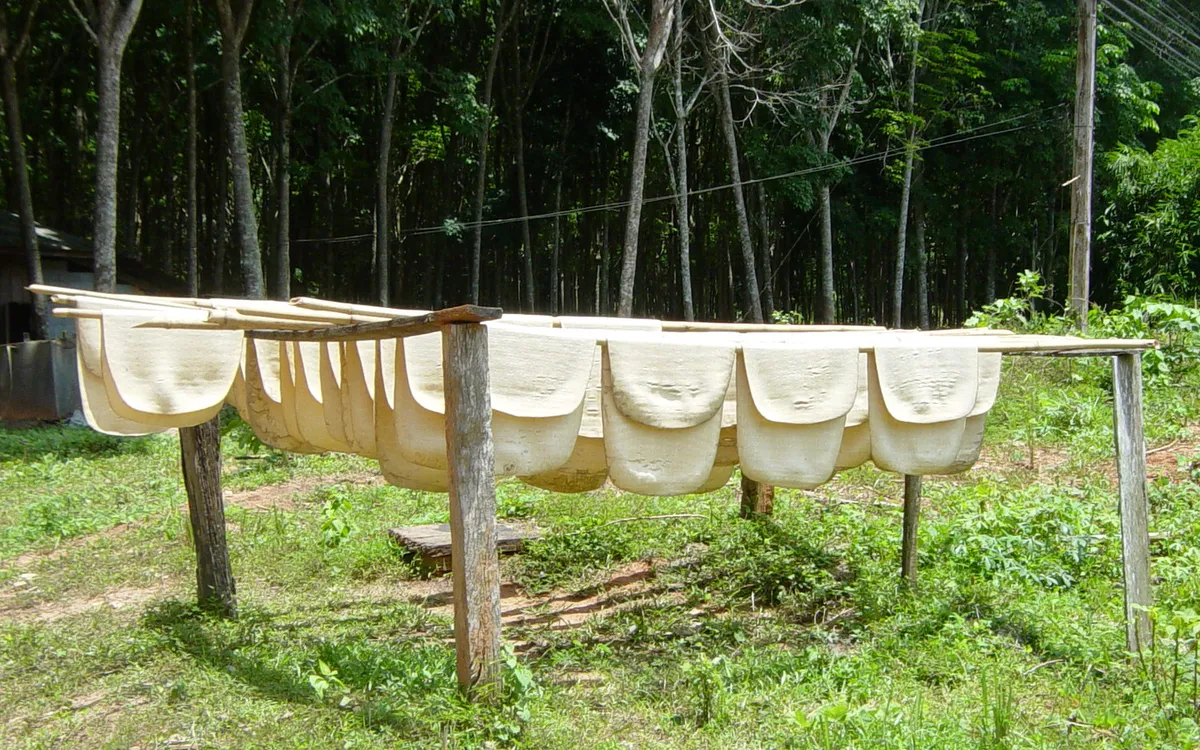

There is a signal on the Thai side worth reading carefully. Thai Post reported that Mr Benjapol Nakprasert, chairman of the RAOT board, said on 10 September that RAOT had cut its target for EUDR rubber traded through its markets from 130,800 tonnes to 90,826.85 tonnes, a cut of about 31%. The reason: a target set too high would open a gap with real buying demand in the market [3].
According to the same report, RAOT will instead expand its Thai Traceability standard to cover international standards and push it as a national standard. The approach has 4 parts: traceability to the plot with coordinates; plantation management under Good Agricultural Practices (GAP, a plantation standard buyers use for checks); assessment of environmental and land-rights risks; and sustainable plantation management drawing on the principles of FSC (Forest Stewardship Council, an international body that certifies sustainable forest and plantation management) and SNR (Sustainable Natural Rubber; see the abbreviations at the end) [3].
The price gap seen in the central market today is far below the early days of EUDR trading. The BOT study of September 2025 records that in the second quarter of 2024, when EUDR rubber was still scarce, the premium reached 10 baht per kilogram. It then fell to 2–3 baht, and to about 1 baht after the EU announced its first delay [9].
European buyers start checking down to the plot
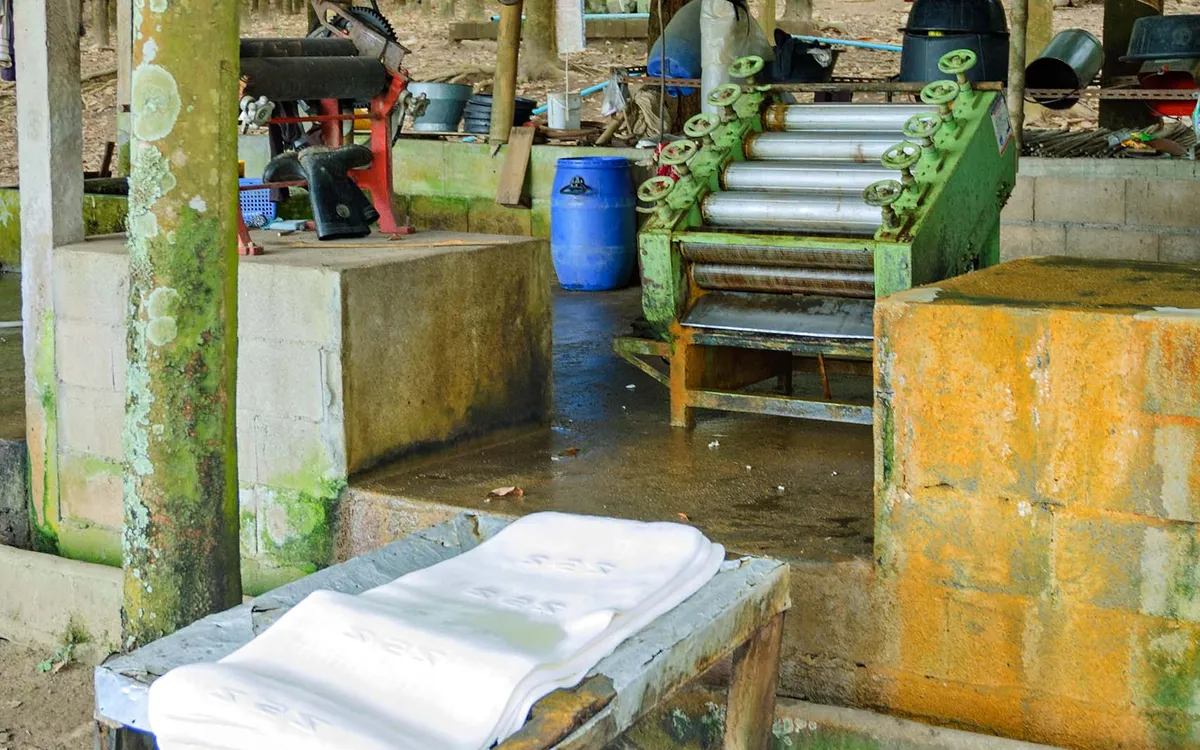

The end market is moving. European Rubber Journal reported on 12 October that Dunlop Aircraft Tyres, a maker of aircraft tyres, chose a platform from German software company osapiens to check deforestation and legality risks in its natural rubber, down to the plots where the rubber was tapped [7].
NR compliance is complicated "because the real risk sits many tiers upstream, well beyond what any manual process can reasonably track." — Stephan de Barse, Chief Revenue Officer (CRO, head of sales), osapiens, a company that sells traceability software (quoted in European Rubber Journal, 12 Oct 2026) [7]
What growers need

Polygon One sums up the EUDR rules. Plantations of up to 4 hectares, or 25 rai (at 1 hectare = 6.25 rai), can use a single coordinate point with 6 decimal places. Larger plantations need plot boundaries (polygons). The data submitted are coordinates; the farmer's name or ID number is not required. And the EU wants to know the period when the rubber was tapped, not just the shipping date [2].
One point that should reassure many growers: European Commission FAQ 4.14, cited by Polygon One, counts rubber plantations as agricultural land, not forest. Plantations that were already rubber before 2021 can be cut down and replanted without counting as deforestation. But land cleared from forest to plant rubber after 31 December 2020 cannot sell rubber into Europe at all [2].
The big problem is land titles. Mongabay reported in June that about 20% of Thai smallholder rubber farmers have no formal land title. These farmers must first confirm their status with the Agricultural Land Reform Office (ALRO, the agency where growers without a full title deed confirm their land status) before they can sell rubber into the EU market. Mongabay also cites a 2024 report by RAOT and the European Forest Institute saying RAOT has mapped coordinates for more than 3.1 million hectares of rubber, or about 79% of the country's rubber-producing area [8].
The documents growers need are not complicated. The BOT study says farmers selling EUDR rubber use their farmer registration, a copy of their ID card, a land title document, and a consent form allowing their data to be shared with the buyer [9]. Growers not yet registered with RAOT, or whose plots RAOT has not yet mapped, have 78 days before the law applies to large and medium EU importers.
How RubNex calculated: The EUDR price gap = Songkhla central-market EUDR field-latex close minus regular field-latex close, daily, from RAOT data [4][5]. We used only the 41 days between 2 Sep and 13 Oct 2026 with both prices. The 1.96-baht average is the sum of the gaps over the 41 days divided by 41. The target cut of about 31% = (130,800 − 90,826.85) ÷ 130,800 [3]. The 78 days are calendar days from 13 Oct to 30 Dec 2026 [1].
Charts: RubNex, from RAOT Songkhla central-market field-latex closing prices and the European Commission's start dates. Each chart carries its own source line.
Abbreviations
In order of first appearance
RAOT – Rubber Authority of Thailand. The state agency that oversees the whole rubber sector and runs the central markets used as a daily reference price.
EUDR – EU Deforestation Regulation. Rubber sold into Europe must prove it does not come from deforested land, which affects both buying prices and the documents growers need.
BOT – Bank of Thailand. Thailand's central bank; its research department wrote the EUDR study cited here.
TPSO – Trade Policy and Strategy Office, Ministry of Commerce. Tracks Thai rubber exports to Europe and summarises Thailand's EUDR risk status.
GAP – Good Agricultural Practices. A plantation standard buyers use for checks, and one of the four parts of RAOT's Thai Traceability standard.
FSC – Forest Stewardship Council. An international body that certifies sustainable forest and plantation management, well known to European rubber buyers.
SNR – Sustainable Natural Rubber. Thai Post reported that RAOT will apply this principle in its Thai Traceability standard. The report did not say which framework it means, but the name matches IRSG's Sustainable Natural Rubber Initiative (SNR-i), a voluntary set of criteria in 5 areas [10]: yield, rubber quality, forests, water and labour rights. It is not a certificate.
CRO – Chief Revenue Officer. The head of sales at a company that sells traceability systems; read his words knowing he has a commercial interest.
ALRO – Agricultural Land Reform Office. Growers without a formal land title must confirm their land status with this agency before selling rubber into Europe.
Sources
- Regulation on Deforestation-free products · European Commission (DG Environment)
- The EUDR for rubber: what tyre makers, importers, compounders and the rubber goods trade must do by 30 December 2026 · Polygon One
- RAOT cuts EUDR rubber target to 90,000 tonnes, pushes 'Thai Traceability' to raise Thai rubber standards · Thai Post
- Central rubber market prices: field latex, Sep–Oct 2026 (Non-EUDR / EUDR) · Rubber Authority of Thailand (RAOT)
- Central rubber market prices: field latex, Sep 2026 · Rubber Authority of Thailand (RAOT)
- EUDR outlook: turning a regulation into a 'golden opportunity' for Thai rubber · Trade Policy and Strategy Office (TPSO), Ministry of Commerce
- Dunlop Aircraft Tyres automating EUDR compliance process · European Rubber Journal
- In Thailand, EUDR pressure on small-scale rubber farmers prompts private-sector assistance · Mongabay
- Economic Pulse Issue 9: Impact of the EUDR on the Thai rubber industry · Bank of Thailand
- Sustainable Natural Rubber Initiative (SNR-i) · International Rubber Study Group (IRSG)
Images: Trougnouf (Benoit Brummer) (CC BY 4.0) · Rohitjahnavi (CC BY-SA 4.0) · Blue Plover (CC BY-SA 3.0) · Everhard van Eimeren (CC BY-SA 4.0) · Vyacheslav Argenberg (CC BY 4.0)