
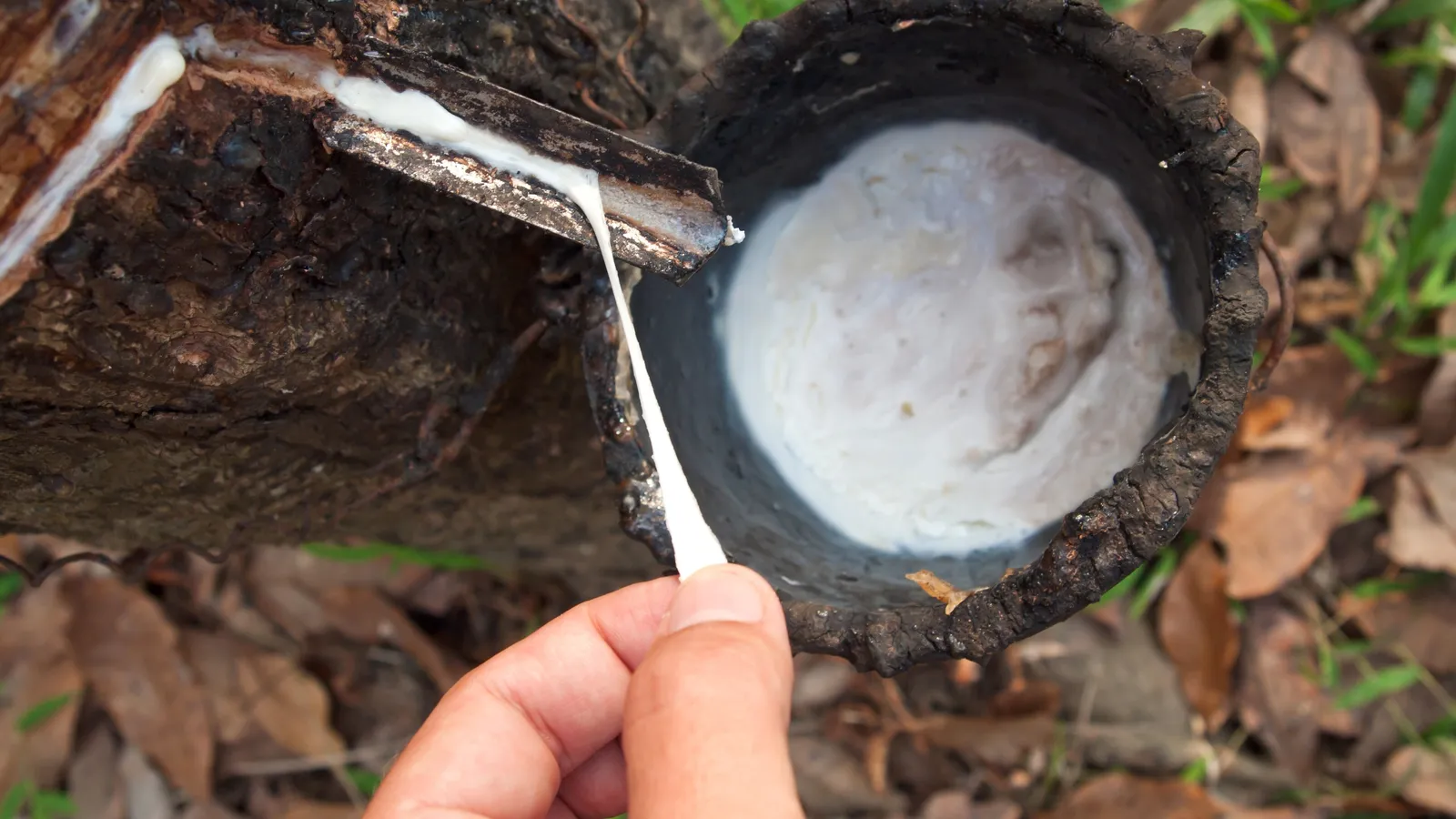
World rubber prices hit a 10-plus-year high. The cause is short supply, not more buying
RAOT closing prices show Thai field latex rising from 83 to 89.45 baht per kilogram in under two weeks, while ANRPC's latest forecast puts world output about 320,000 tonnes below demand this year. IRSG warns that prices at this level will bring idle plantations back into tapping.
Closing prices from the Rubber Authority of Thailand (RAOT) show field latex at the central market rising from 83 to 89.45 baht per kilogram in less than two weeks. The latest ANRPC forecast says world output this year will fall short of demand by about 320,000 tonnes. IRSG warns that prices at this level will draw idle plantations back into tapping.
According to closing prices at the central rubber markets of the Rubber Authority of Thailand (RAOT, the state agency that oversees the whole rubber sector and runs the central markets growers use as a daily reference price), field latex closed at 89.45 baht per kilogram on 13 October 2026 [1]. RubNex checked RAOT closing prices for regular rubber (Non-EUDR, meaning rubber not certified under the EUDR, the EU Deforestation Regulation, which requires rubber sold into Europe to prove it does not come from deforested land) going back one year from 13 October 2025: 356 days with prices. This is the highest price in that period, above the previous peak of 88.95 baht on 11–12 June [1][3][11]. The same RAOT data show the price was still 83 baht on 1 October. On the same day a year earlier it closed at 53.85 baht, so today's price is 35.60 baht higher than a year ago [1][3].
Cup lump did not rise every day. RAOT data for 13 October show cup lump at DRC 100% (DRC is dry rubber content; the DRC 100% price is the price for pure dry rubber, while what growers actually receive depends on the rubber percentage of each lump) closed at 81.69 baht, down from 82.65 baht the day before [2]. That day, only two central markets held field-latex auctions: Songkhla and Yala.
Overseas markets moved first
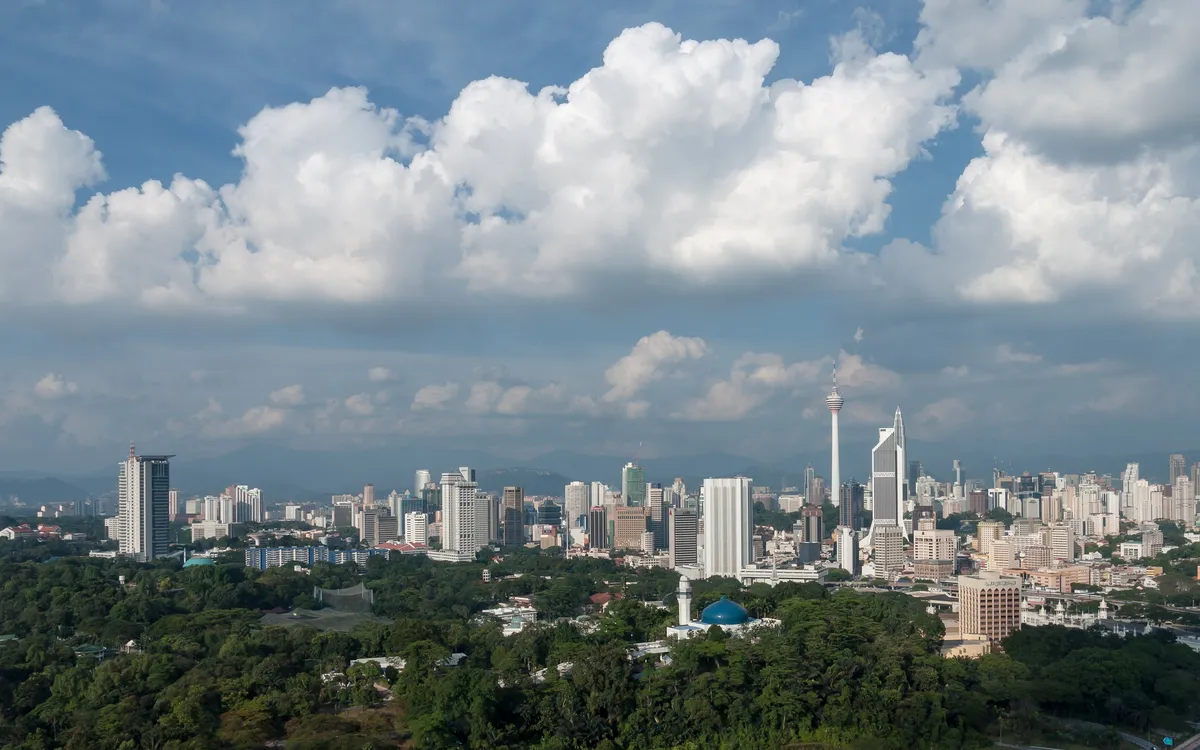

Thai rubber is following overseas markets. Malaysia's Bernama news agency reported that SMR 20 (Standard Malaysian Rubber, a rival to Thai block rubber) on the Kuala Lumpur market closed on 12 October at 1,074.5 sen per kilogram, the highest since 9 May 2012. Traders quoted by Bernama said buying came from regional futures markets and fears of a supply shortfall, due to heavy rain in Thailand expected to last into mid-October, plus the chance that El Niño strengthens and lasts into early 2027 [4].
Japan Exchange Group (JPX, owner of the Osaka exchange that trades rubber futures, another gauge of the Asian rubber market) reported, as cited by European Rubber Journal, that in the week ending 9 October the Osaka March 2027 rubber contract closed at its highest since 2011, while Singapore's January 2027 contract reached its highest since 2013 [7].
ANRPC cuts its output forecast
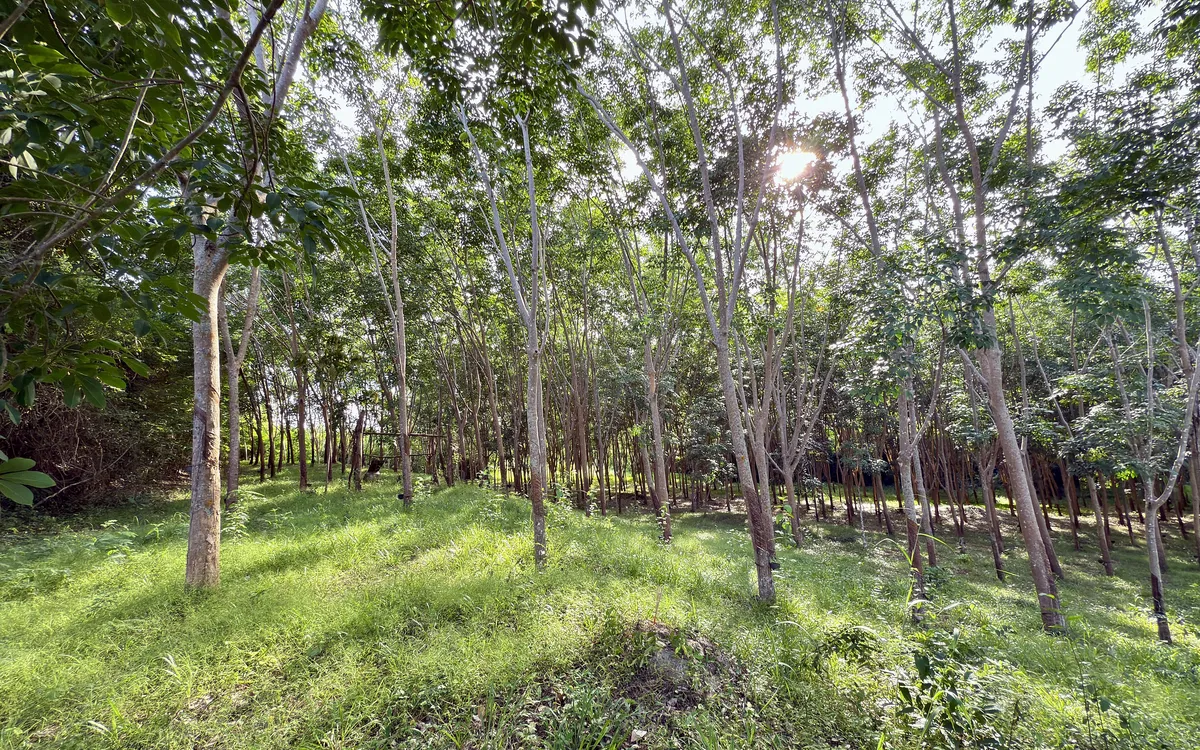

The root of the story is on the supply side. The Association of Natural Rubber Producing Countries (ANRPC, which groups the world's major rubber producers; its forecasts show whether the world will have enough rubber this year) cut its 2026 world output forecast in its August statistical report to 15.039 million tonnes, from 15.279 million tonnes in the July report, as European Rubber Journal reported on 1 October. About 240,000 tonnes of forecast output disappeared, and ANRPC expects output to grow only 0.6% for the year. ANRPC puts world demand at 15.356 million tonnes. Subtract one from the other and the shortfall is about 320,000 tonnes [5].
In the same figures, ANRPC expects Indonesia to produce 1.877 million tonnes, down 8%; Malaysia down 10.9% to 300,000 tonnes; and Vietnam down 4.2% to 1.29 million tonnes. Thailand bucks the trend: ANRPC expects Thai output this year of 4.834 million tonnes, up 1.9% [5].
ANRPC estimates world output in August alone at 1.396 million tonnes, down 4.5% from a year earlier, citing uneven rainfall and drier-than-normal weather in Southeast Asia [5]. Country figures point the same way. The Department of Statistics Malaysia (DOSM, which issues Malaysia's official rubber output figures) reported on 12 October that Malaysia's natural rubber output in August was 29,510 tonnes, down 5.7% from a year earlier, though up from July [12][13]. VOV (Voice of Vietnam, Vietnam's state broadcaster), citing Vietnam's Ministry of Agriculture and Environment, said Vietnam exported 1.1 million tonnes of rubber in the first nine months of the year. Volume fell 16.2%, but the average export price rose 14.1% to 2,016.8 US dollars per tonne [9].
Rubber users are not buying more to match the price. ANRPC expects world rubber consumption to grow just 0.4% this year, and calls this lacklustre demand growth. In the same forecast, China, the world's largest rubber user, will use 7.04 million tonnes, up 1.2%, while Thai consumption will fall 3.5% [5].
Speculative money adds speed
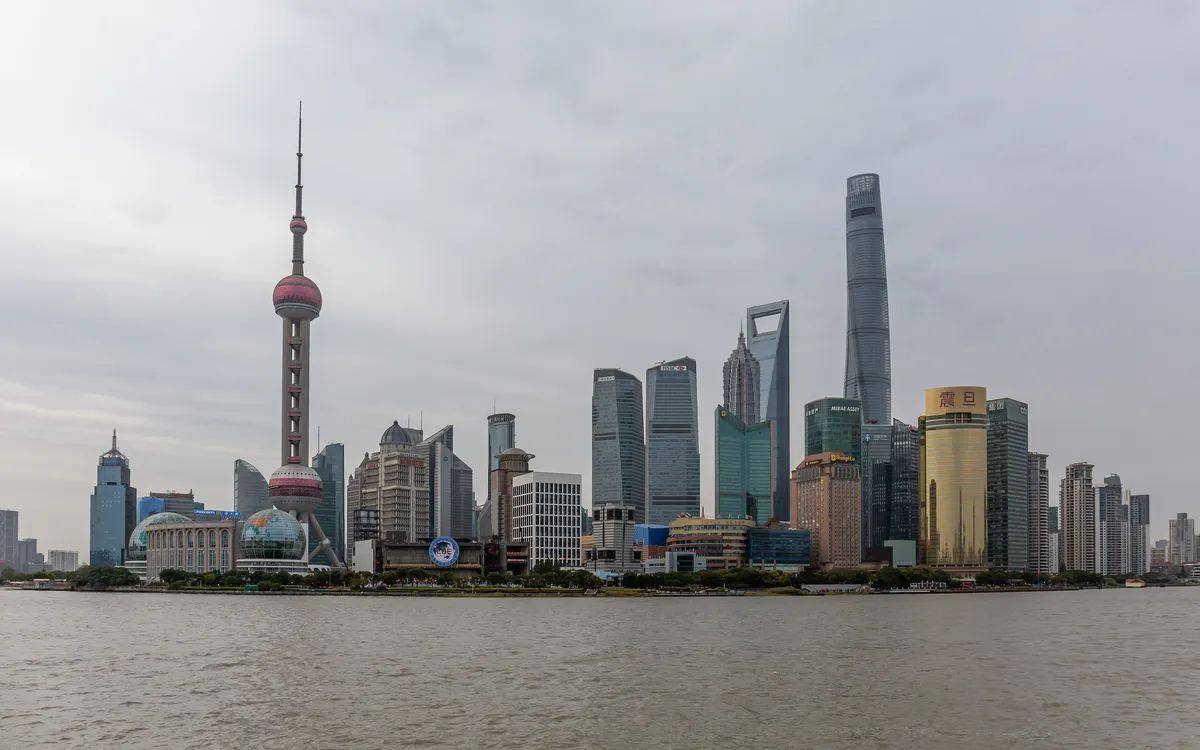

Prices are not rising on supply alone. In the same report cited by European Rubber Journal, JPX estimates that in the week ending 9 October, commodity funds and Chinese speculators built up positions in rubber futures on China's SHFE (Shanghai Futures Exchange, China's main rubber futures market) and INE (Shanghai International Energy Exchange, which trades block-rubber futures) totalling about 400,000 tonnes [7].
Money like this can leave as fast as it comes. Daily trading data published by SHFE show the RU2701 rubber contract closed on 13 October at 20,305 yuan per tonne, 475 yuan below the previous day's settlement of 20,780 yuan, a drop of about 2.29% [10]. That was the same day Thai field latex hit its one-year high.
Crude oil is another support. An RAOT report cited by Thansettakij put Brent crude at 102.82 US dollars per barrel [8]. The International Rubber Study Group (IRSG, an intergovernmental body that compiles world rubber production and consumption statistics, with both producing and consuming members) explains that expensive oil makes synthetic rubber expensive too, so natural rubber is not easily displaced by synthetic. But if oil falls, this support weakens too [6].
RAOT's view for this week
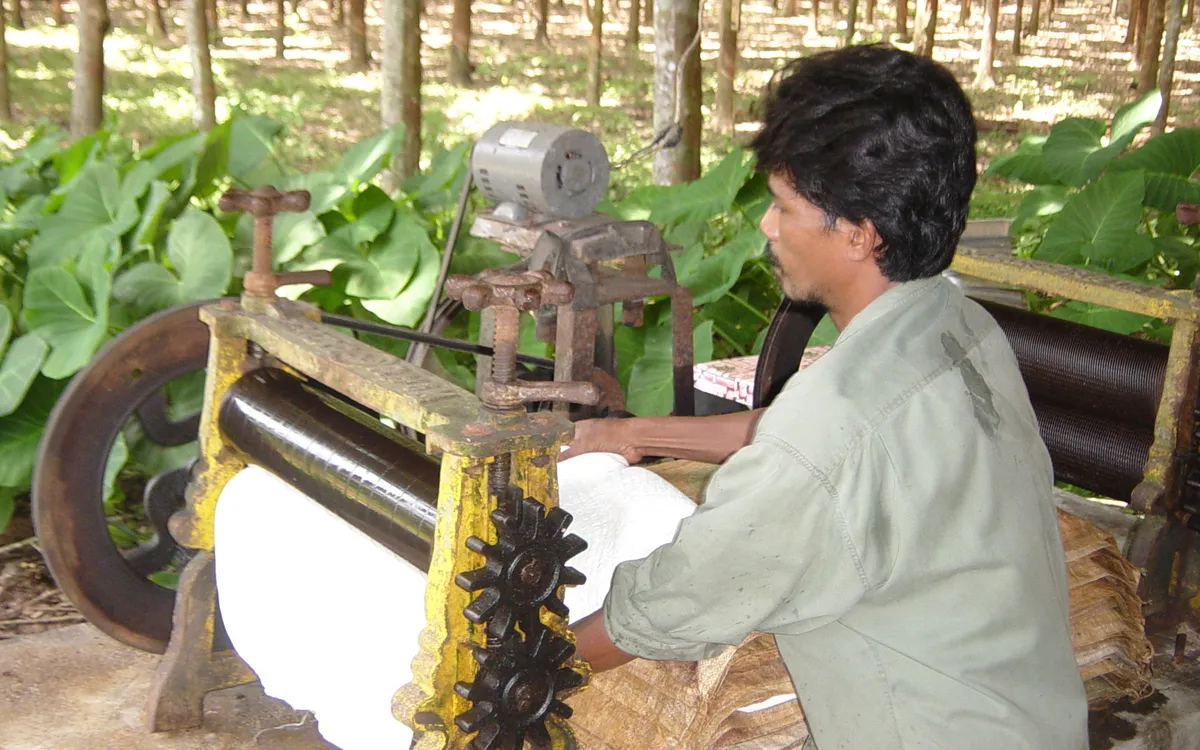

Mr Kosol Boonkong, RAOT Deputy Governor for Administration, told Thansettakij on 11 October that for the week of 12–16 October, all rubber prices were likely to rise. RAOT put ribbed smoked sheet No. 3 at 89.50–92 baht per kilogram, field latex at 86.40–89 baht, and cup lump DRC 100% at 78.60–81.20 baht. The reasons: overseas futures prices and domestic output that may fall because of rain. Risks to watch: China's economy, crude oil prices and conflict in the Middle East [8].
Just two trading days later, the actual price broke through the top of the range. RAOT's field latex close on 13 October was 89.45 baht, above the 89-baht upper bound RAOT had forecast [1]. Cup lump closed at 82.65 baht on 12 October and 81.69 baht on 13 October, above the 81.20-baht upper bound on both days [2].
High prices will bring rubber back
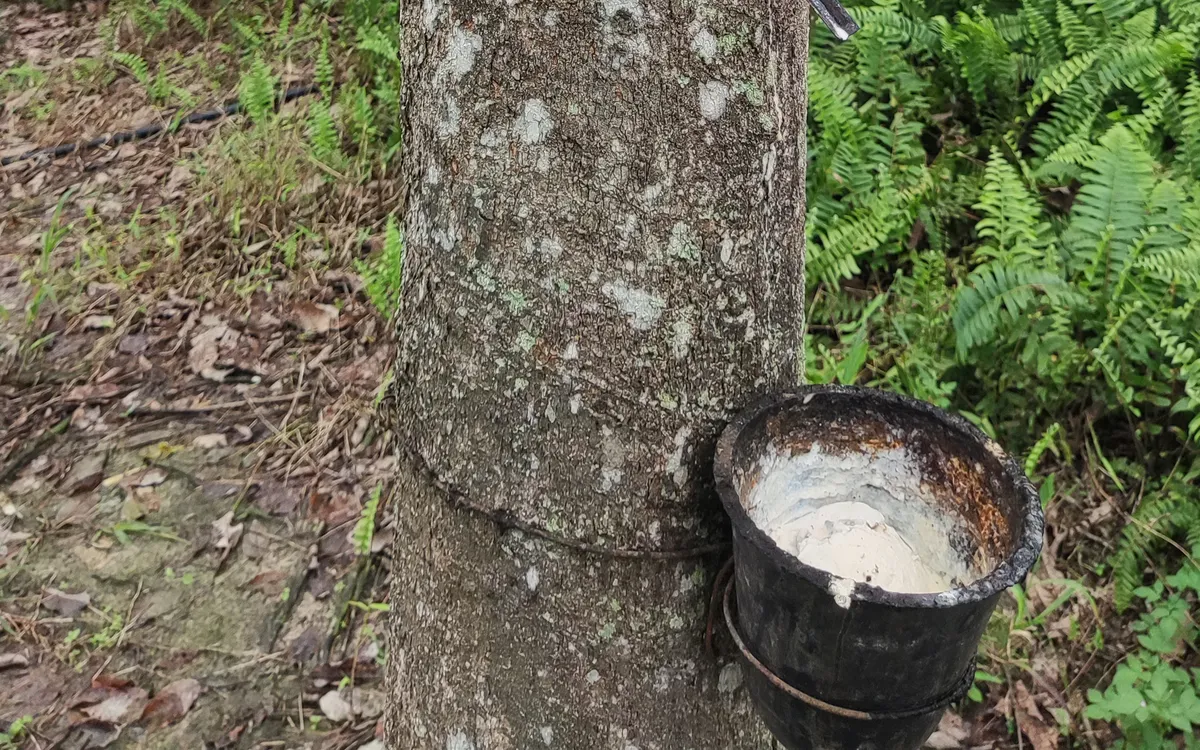

IRSG says in its October rubber market review, as reported by European Rubber Journal on 7 October, that the September price of Thai STR 20 (Standard Thai Rubber, the block-rubber grade that growers' cup lump is processed into) was 33% higher than a year earlier. Indonesia's SIR 20 (Standard Indonesian Rubber, a major export rival to Thailand) was 39% higher, and Malaysia's SMR 20 34% higher. But IRSG warns that today's shortage does not mean the world lacks rubber trees. It estimates that if every tappable tree were tapped, the world could produce about 19.6 million tonnes, compared with actual output of about 15.1 million tonnes [6].
Subtract these two IRSG figures and the gap of about 4.5 million tonnes represents trees old enough to tap but not yet tapped. IRSG expects that if prices stay attractive, owners will reopen tapping or tap more often. Supply could rise fairly quickly and push prices down, especially if it happens when factories are buying less [6].
"Today's shortage can potentially be addressed by tapping more of the trees that already exist. A future shortage may require trees that have not yet been planted." — IRSG, October 2026 review of natural rubber markets, as reported by European Rubber Journal [6]
The long-term picture is different. IRSG figures show world output grew from about 10.1 million tonnes in 2007 to 13.9 million tonnes in 2018, but growth slowed sharply after that: in 2025 it was only about 15 million tonnes. IRSG notes that the world's rubber trees are ageing every year, replanting and new planting remain low, and trees planted today take years before they can be tapped. Meanwhile, IRSG expects the world vehicle fleet to grow from about 1,740 million in 2026 to 1,860 million in 2030 [6].
For growers, these figures say that today's price is tied more to the weather than to real demand growth. JPX itself expects the uptrend to continue until the effects of El Niño ease, and when that happens prices may pull back [7].
How RubNex calculated: The one-year high compares RAOT Non-EUDR field-latex closing prices on all 356 days with prices between 13 Oct 2025 and 13 Oct 2026 [1][3][11]. The year-on-year gap of 35.60 baht = 89.45 − 53.85. The lost forecast output of about 240,000 tonnes = 15.279 − 15.039 million tonnes, and the shortfall of about 320,000 tonnes = 15.356 − 15.039 million tonnes (ANRPC figures [5]). The 4.5-million-tonne gap = 19.6 − 15.1 million tonnes (IRSG figures [6]). The SHFE drop of 2.29% = 475 ÷ 20,780 [10].
Charts: RubNex, from RAOT central-market closing prices and ANRPC forecasts. Each chart carries its own source line.
Abbreviations
In order of first appearance
RAOT – Rubber Authority of Thailand. The state agency that oversees the whole rubber sector and runs the central markets used as a daily reference price.
EUDR – EU Deforestation Regulation. Rubber sold into Europe must prove it does not come from deforested land, which affects both buying prices and the documents growers need.
DRC – Dry Rubber Content. The share of real rubber in a lump. The cup lump DRC 100% price is the price for pure dry rubber; the actual price depends on each lump's rubber percentage.
SMR – Standard Malaysian Rubber. Malaysia's block rubber, a rival to Thai block rubber.
JPX – Japan Exchange Group. Owner of the Osaka exchange that trades rubber futures.
ANRPC – Association of Natural Rubber Producing Countries. Groups the world's major producers; its forecasts show whether the world will have enough rubber.
DOSM – Department of Statistics Malaysia. Issues Malaysia's official rubber output figures.
VOV – Voice of Vietnam. Vietnam's state broadcaster; the figures cited come from Vietnam's Ministry of Agriculture and Environment.
SHFE – Shanghai Futures Exchange. China's main rubber futures market; prices there reflect Chinese buying and speculative money.
INE – Shanghai International Energy Exchange. Another Chinese exchange that trades block-rubber futures.
IRSG – International Rubber Study Group. An intergovernmental body that compiles world rubber statistics, with both producing and consuming members.
STR – Standard Thai Rubber. The block-rubber grade that Thai growers' cup lump is processed into, so its price links directly to cup lump prices.
SIR – Standard Indonesian Rubber. Indonesia's block rubber, a major export rival to Thailand.
Sources
- Central rubber market prices: field latex, Oct 2026 (Non-EUDR / EUDR) · Rubber Authority of Thailand (RAOT)
- Central rubber market prices: cup lump DRC 100%, Oct 2026 · Rubber Authority of Thailand (RAOT)
- Central rubber market prices: field latex, Oct 2025 (previous year) · Rubber Authority of Thailand (RAOT)
- Rubber Market Ends Higher, SMR 20 Hits 1,074.5 Sen Per Kg · Bernama
- ANRPC cuts 2026 natural rubber supply forecast · European Rubber Journal
- IRSG sees 'structural risks' supporting firmer natural rubber prices · European Rubber Journal
- Rubber futures extend gains on supply concerns · European Rubber Journal (citing JPX)
- RAOT expects rubber prices to rise across the board next week; smoked sheet nears 92 baht/kg · Thansettakij
- Agro-forestry-fishery exports rise 7.8% in nine months · VOV (Voice of Vietnam)
- SHFE daily futures data (kx), 13 Oct 2026: natural rubber ru2701 close 20,305 / prev. settlement 20,780 · Shanghai Futures Exchange (SHFE)
- Central rubber market prices: field latex, monthly, Nov 2025–Sep 2026 (same page, select month/year) · Rubber Authority of Thailand (RAOT)
- Monthly Rubber Statistics, August 2026 · Department of Statistics Malaysia (DOSM)
- Malaysia's Natural Rubber Output Rises 9.6 Pct In August · Bernama (BernamaBiz)
Images: Vyacheslav Argenberg (CC BY 4.0) · CEphoto, Uwe Aranas (CC BY-SA 3.0) · Bossficial (CC BY 4.0) · Balon Greyjoy (CC0) · Blue Plover (CC BY-SA 3.0) · Wee Hong (CC BY-SA 4.0)