
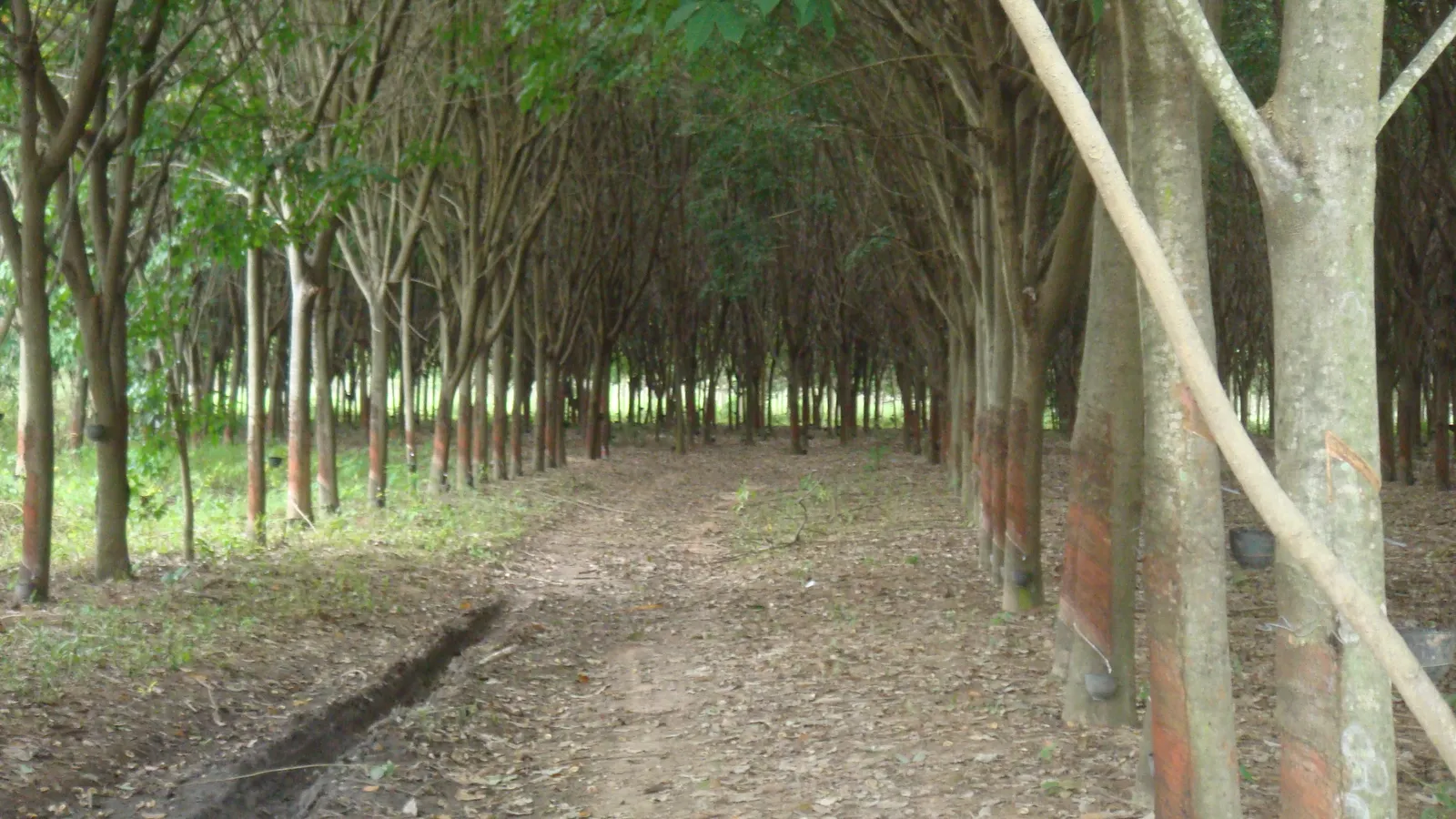
High rubber prices, but many plantations have no one to tap them: India launches a tapper platform, China speeds up tapping-machine trials
IRSG figures suggest about 4.5 million tonnes of potential rubber output sits in tappable but untapped trees, and India estimates about 100,000 hectares of untapped plantations. Hainan is field-testing a new tapping machine, while a farmer group in Yala, southern Thailand, says more than half of tappers have gone, though no official figures confirm it.
IRSG figures suggest the world still has tappable but untapped rubber trees worth about 4.5 million tonnes of output. Indian officials estimate about 100,000 hectares of untapped plantations. Hainan has put a new tapping machine into field trials. In southern Thailand, a farmer group in Yala says more than half of tappers have gone, but no official figures confirm this.
The International Rubber Study Group (IRSG), an intergovernmental body that compiles world rubber production and consumption statistics, with both producing and consuming member countries, says rubber prices this year hit multi-year highs because of tight supply and erratic weather. But the rubber reaching the market has not risen to match. Meanwhile, many trees around the world are old enough to tap but are not being tapped.
In its October rubber market review, as reported by European Rubber Journal on 7 October, IRSG estimates that if every tappable tree were tapped, the world could produce about 19.6 million tonnes of rubber. Actual output is now about 15.1 million tonnes. The gap of about 4.5 million tonnes represents mature trees that are not being tapped. IRSG expects producers to open up these areas or tap more often if prices stay attractive [1]. The question is: who will tap them?
India: 100,000 hectares untapped
.jpg)
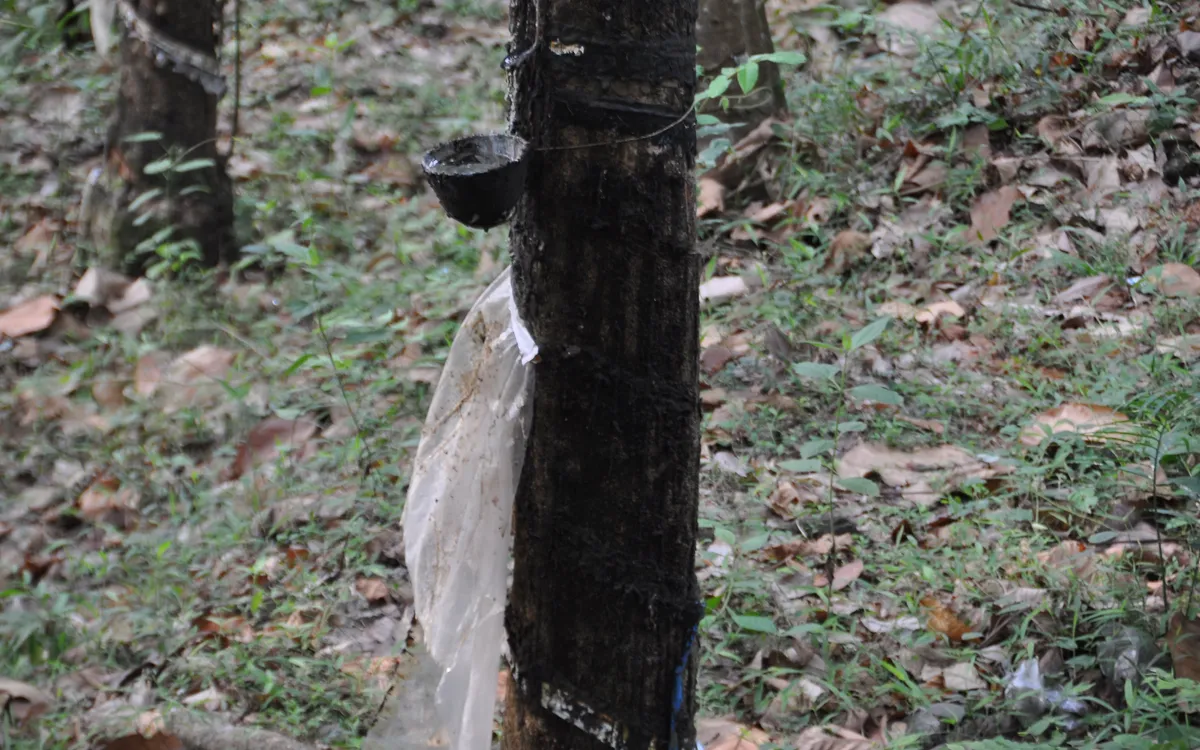
India sees the problem most clearly. The newspaper Mathrubhumi reported on 1 October, citing official figures, that about 100,000 hectares of rubber are untapped, equal to about 625,000 rai (at 1 hectare = 6.25 rai). The same report says many owners have gone to work abroad, while some do not dare hire tapping contractors because they are unsure of the quality of the work [2].
Mathrubhumi reported that the Rubber Board of India is about to launch an online platform called INR Konnect, where plantation owners and tappers register and are matched. Only tappers registered with the Rubber Board are accepted, and officials will visit plantations to check tapping. The system is undergoing security checks. Rubber Board chairman N. Hari said that if the Ministry of Commerce approves, farmers can trial it within a month. Rubber Board officials expect national output to rise by 20% if abandoned plantations are tapped again [2].
"It is aimed at ensuring the availability of skilled workers to plantations where tapping operations have been disrupted due to labour shortages." — N. Hari, Chairman, Rubber Board of India (The Hindu, 6 Oct 2026) [3]
India's other path is training women to tap. Mr Hari told The Hindu that 1,256 women were trained in the past month, and another 980 rural women were trained in India's north-east [3]. Priya Varma, director of India's National Institute for Rubber Training (NIRT, the Rubber Board's tapper-training unit), told Onmanorama that in 2025–26 the institute ran 102 batches of an 8-day course for women, training 1,607 people in rubber tapping, nursery management and budding. A Rubber Board official in Pathanamthitta told the same outlet that more than 80% of those trained still tap, both on their own plantations and as daily-wage tappers [4].
Hainan: a 26-year tapper races a machine
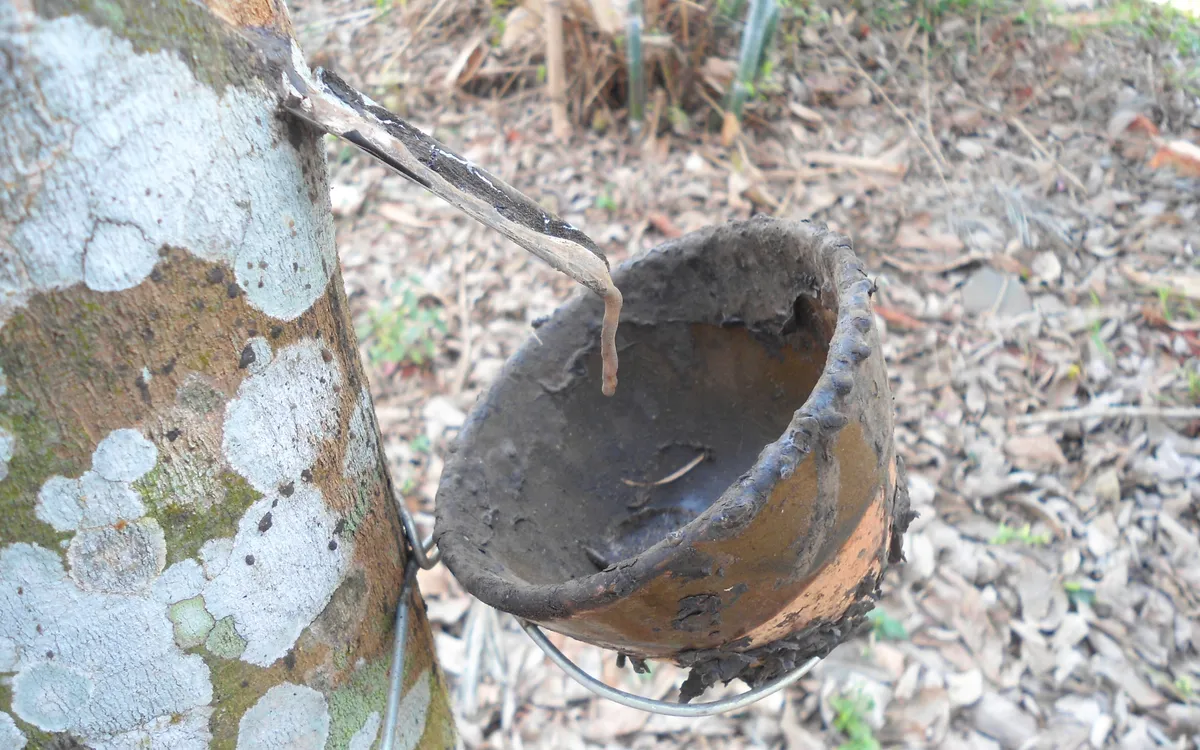

China is taking another path. People's Daily Online reported in late August that version 3.4 of a smart tapping machine, developed in-house by China Hainan Rubber Industry Group, has entered large-scale field testing. At the Longjiang branch plantation, the company set Yu Hainong, a national model-worker tapper with 26 years of experience, against the machine. The human won, narrowly [5].
"In a one-on-one match, it still can't beat me. But in a team battle, the machine has the edge," Yu said. The report says the machine still cannot judge the structure, thickness and age of each tree's bark accurately enough, so its cuts still have small flaws. Its strength is working at scale [5].
Han Bingguang, deputy general manager of the Longjiang branch, told People's Daily Online that older tappers are retiring, so the labour shortage keeps getting worse. He explained that with hand tapping, one side of the tapping panel lasts 7–8 years, and both sides about 15 years in total. Tapping renewed bark takes highly skilled tappers, while a machine keeps its precision steady, so it can keep tapping renewed bark and may extend a tree's productive life. The trial also aims to train machine technicians and find ways for people and machines to work together [5].
Other research suggests machines still lag behind people. A paper in ES Food and Agroforestry, published in May, reported field tests of the AWT-NYLDGJ-2 tapping robot: it yielded 85.92% of the dry rubber of hand tapping, but gave a smoother tapping surface, better control of cut thickness, and fewer bark wounds [8].
Southern Thailand: tappers gone, plantations left
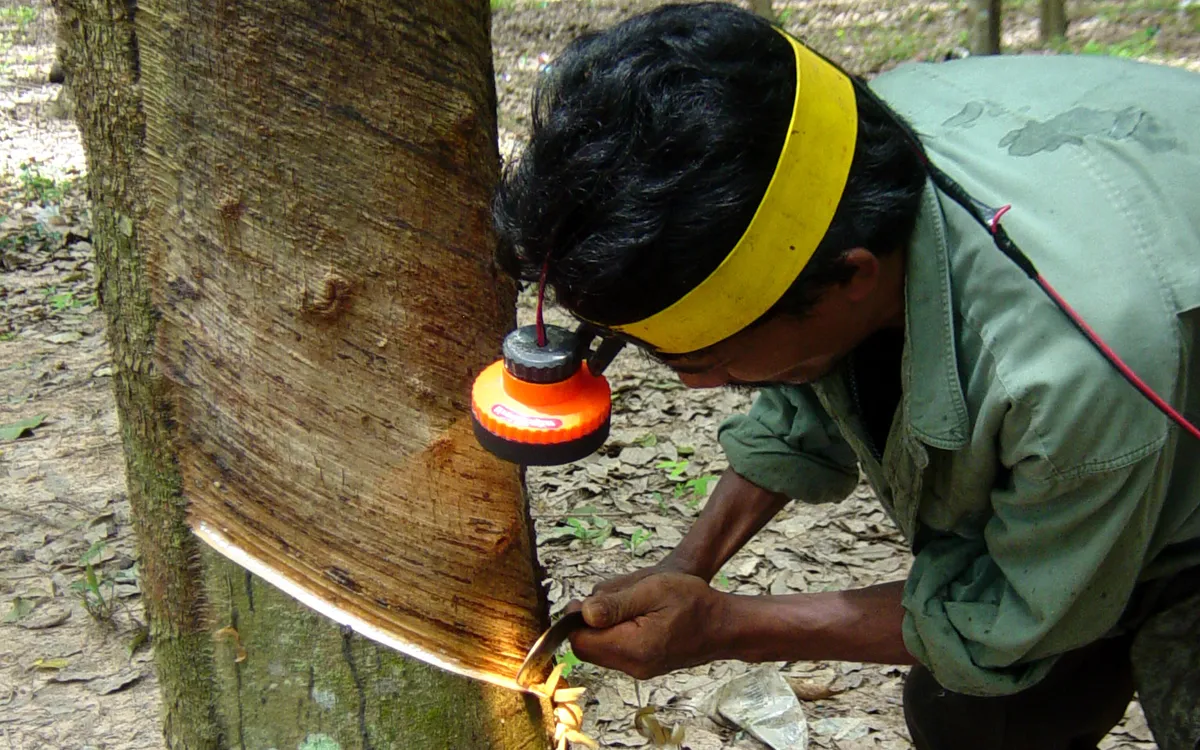

In Thailand, RubNex has not found recent official figures on how much rubber is untapped. There are only voices from the ground. The Bangkok Times reported on 28 September, citing the Than Nam Thip plantation group in Betong district, Yala province, that the tapper shortage is as high as 50–60%, especially in Pattani, Yala and Narathiwat [6]. This is one farmer group's estimate. It has not been confirmed by the Rubber Authority of Thailand (RAOT, the state agency that oversees the whole rubber sector and runs the central markets that growers use as a daily reference price) or by other major media.
Mr Rueangyot Pengsakul, chair of the Tham Phannara community enterprise of tappers and smallholders, told The Bangkok Times that many plantations remain untapped because owners have regular jobs, such as in government, and cannot find tappers. Cambodian tappers have gone home, Myanmar workers have moved to factories, and young people do not want to work in rubber [6].
RAOT is tackling the problem through the tapping method. Krungthep Turakij reported on 12 August that RAOT signed an agreement with Khon Kaen University, the Kasetsart Agricultural and Agro-Industrial Product Improvement Institute (KAPI) at Kasetsart University, France's CIRAD (French Agricultural Research Centre for International Development, a long-time rubber researcher) and Japan's Sumitomo Rubber Industries to research a low frequency tapping system (LFTS). As RAOT describes it, the system cuts tapping from every day or every other day to every 3, 4 or 6 days, combined with a latex stimulant such as ethephon. The research will study both rubber quality and why farmers would or would not adopt the method. The trial plot is at the Chachoengsao Rubber Research Center [7].
Numbers to watch
IRSG warns that untapped rubber is a buffer that will not last forever. The world's rubber trees get older every year, and replanting and new planting are low. If this buffer shrinks, the next shortage cannot be solved by tapping more. It will have to wait for trees that have not been planted yet [1].
For Thai growers, higher prices become cash only if someone taps the trees. Three paths are being tried in Asia: finding tappers through a central system as in India, tapping less often as RAOT is researching, and machine-assisted tapping as Hainan is testing. All three are still in trials or awaiting approval.
How RubNex calculated: The gap of about 4.5 million tonnes = potential output of 19.6 million tonnes minus actual output of about 15.1 million tonnes, from IRSG figures [1]. 625,000 rai = 100,000 hectares, as cited by Mathrubhumi [2], × 6.25 rai per hectare.
Note: RubNex, which runs this website, is developing RubBOT, an IoT (Internet of Things, devices that send data over the internet) latex harvesting robot that collects latex by puncturing the bark, not by cutting the tapping panel as described in this story.
Charts: RubNex, from figures by IRSG, the Rubber Board of India and People's Daily Online
Abbreviations
In order of first appearance
IRSG – International Rubber Study Group. An intergovernmental body that compiles world rubber production and consumption statistics, with both producing and consuming members.
NIRT – National Institute for Rubber Training (India). The Rubber Board's tapper-training unit; an example of tackling the shortage by training new tappers.
RAOT – Rubber Authority of Thailand. The state agency that oversees the whole rubber sector and runs the central markets used as a daily reference price.
KAPI – Kasetsart Agricultural and Agro-Industrial Product Improvement Institute, Kasetsart University. One of the Thai research bodies in the low-frequency tapping project.
CIRAD – French Agricultural Research Centre for International Development. A French agricultural research centre with long experience in rubber; a partner in the low-frequency tapping project.
LFTS – Low Frequency Tapping System. Tapping every 3, 4 or 6 days, which needs less tapping labour.
IoT – Internet of Things. Devices that send data over the internet; used to describe the RubNex robot in the note.
Sources
- IRSG sees 'structural risks' supporting firmer natural rubber prices · European Rubber Journal
- Need workers for tapping? Rubber Board plans to launch online platform to help growers · Mathrubhumi English
- Rubber Board set to launch platform to tackle tapper shortage in Keralam · The Hindu
- No workers available; Kerala women plantation owners 'tap' opportunity, turn Rubber Board-trained tappers, save money · Onmanorama
- Smart technology transforms rubber tapping in S China's Hainan · People's Daily Online (via BRNN)
- Dry spells and extreme heat in the South hit output; latex falls by more than half, latex factories expand · The Bangkok Times
- RAOT signs with 3 countries to research low-frequency tapping as labour runs short · Krungthep Turakij
- Development and Field Test for the Novel Intelligent Rubber-Tapping Robot with Advantages of Cost Effective and High Performance · ES Food and Agroforestry, vol. 24
Images: 松岡明芳 (CC BY-SA 3.0) · shankar s. from Dubai, united arab emirates (CC BY 2.0) · Anna Frodesiak (CC0) · Blue Plover (CC BY-SA 3.0)